


free, in your inbox
For the Version of You That Is Still Out of Reach
A beginner's guide to microdosing, from our neuroscientist and clinical psychologist.
Thank you! The guide is on its way. If it doesn't show up, it might be hiding in your spam.
The thoughts that keep looping. The habits you mean to break and somehow don't. A mood that either goes flat or swings up and down more than you'd like, never quite in your hands. And under all of it, the feeling that the things you once hoped for have drifted out of reach, that you are playing smaller than you are.
None of this is who you are. It's what happens when you run on the same patterns for too long. And patterns can change.

What is microdosing, actually?
Microdosing is the practice of taking a very small amount of psilocybin, the psychoactive compound found in certain mushrooms, in the morning every second day within a structured protocol.
What you might notice over weeks: the loop quiets. Mood holds. Sleep deepens. Focus sharpens. What you won't notice is a high. No hallucinations, nothing altered. This is sub-perceptual, at most the tiniest feeling of warmth and glow. The truffles do not change who you are. They remove who you are not.
Macrodose: the kind used in clinical trials.
Microdose: 0.5–1g of fresh truffle. Sub-perceptual.
Why our community comes to microdosing
From hundreds of conversations and 8,000+ program participants, the same patterns surface.
Why is the loop so hard to break
Your brain runs on an old script. Written by what you lived, repeated until it feels like reality itself. The past wrote it. It does not have to lead.
The part of your brain that runs the script is called the Default Mode Network. Reflection turns into rumination. Self-awareness turns into self-criticism. The same loops, day after day.
Psilocybin acts on serotonin receptors, particularly 5-HT2A, and temporarily quiets the network. What happens next depends on what you do with the opening. That is where structure comes in.
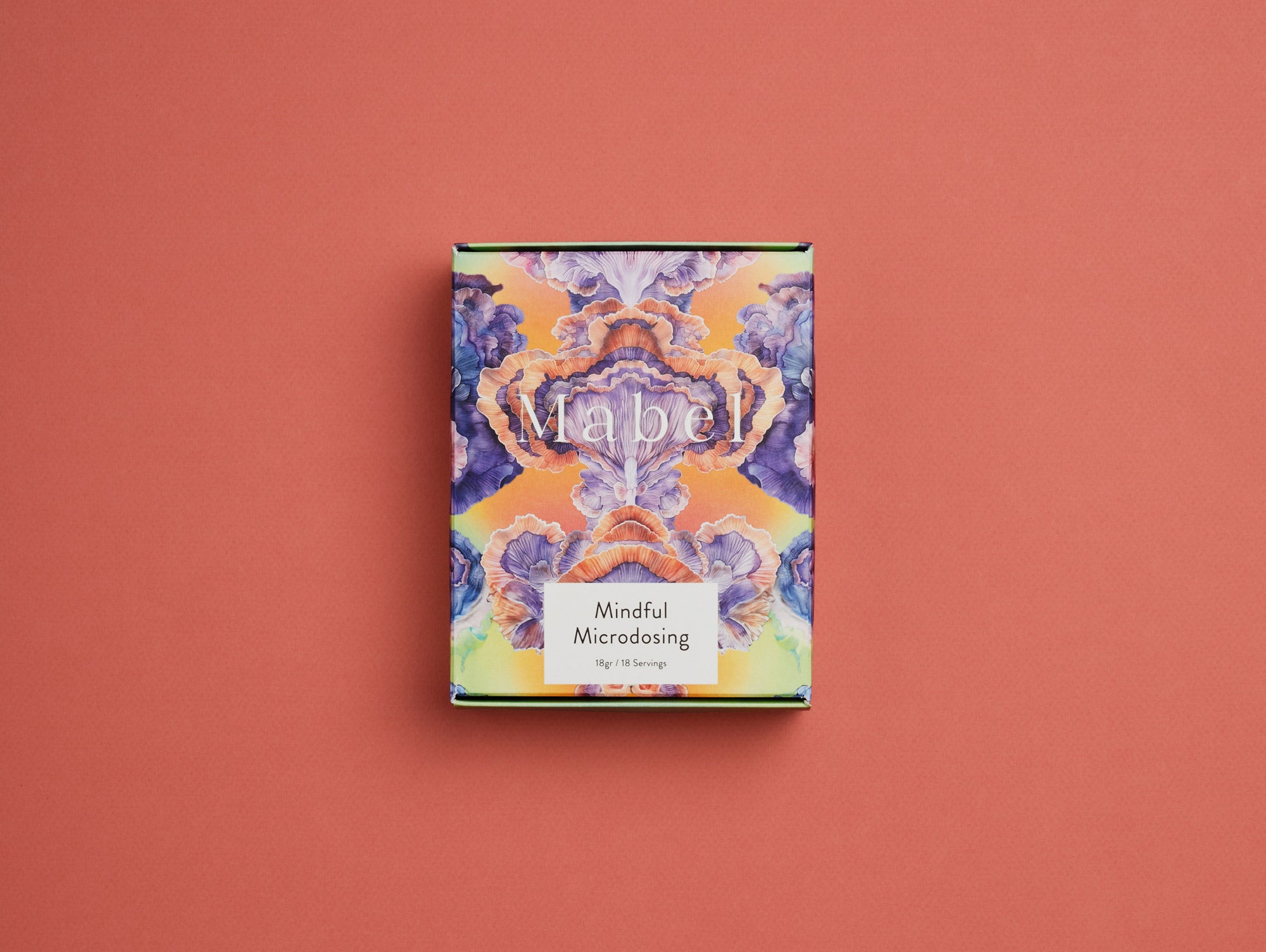
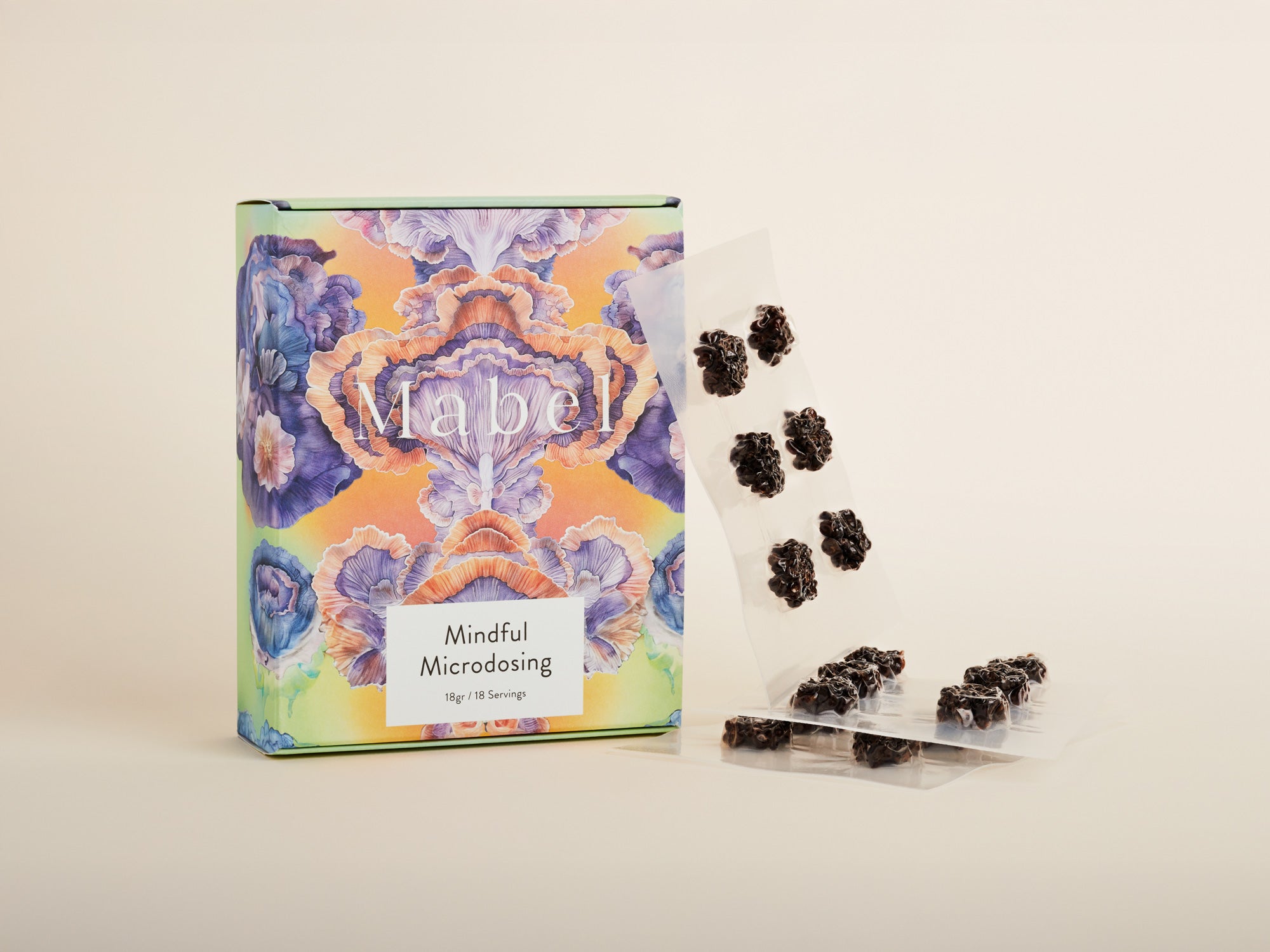
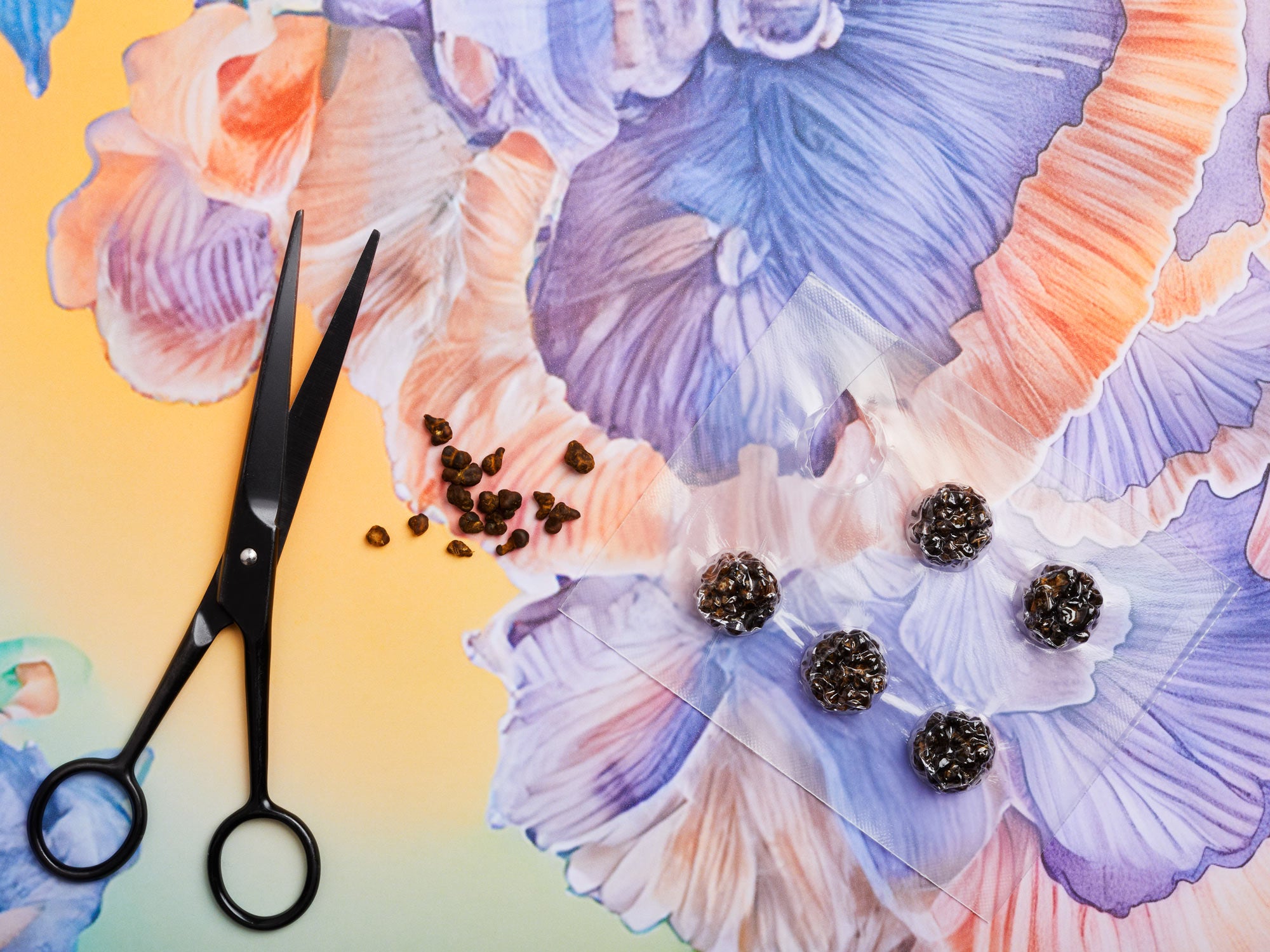
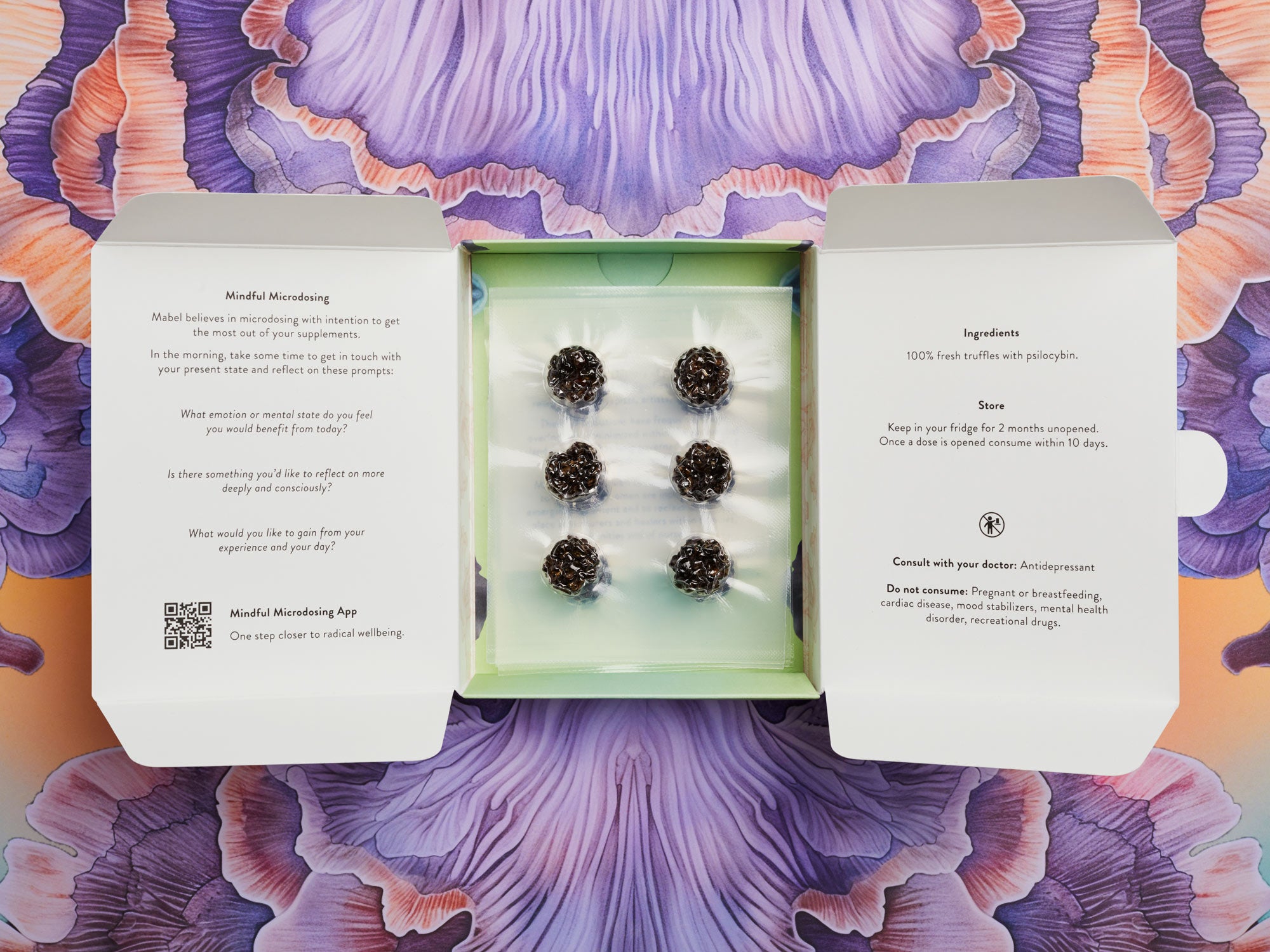
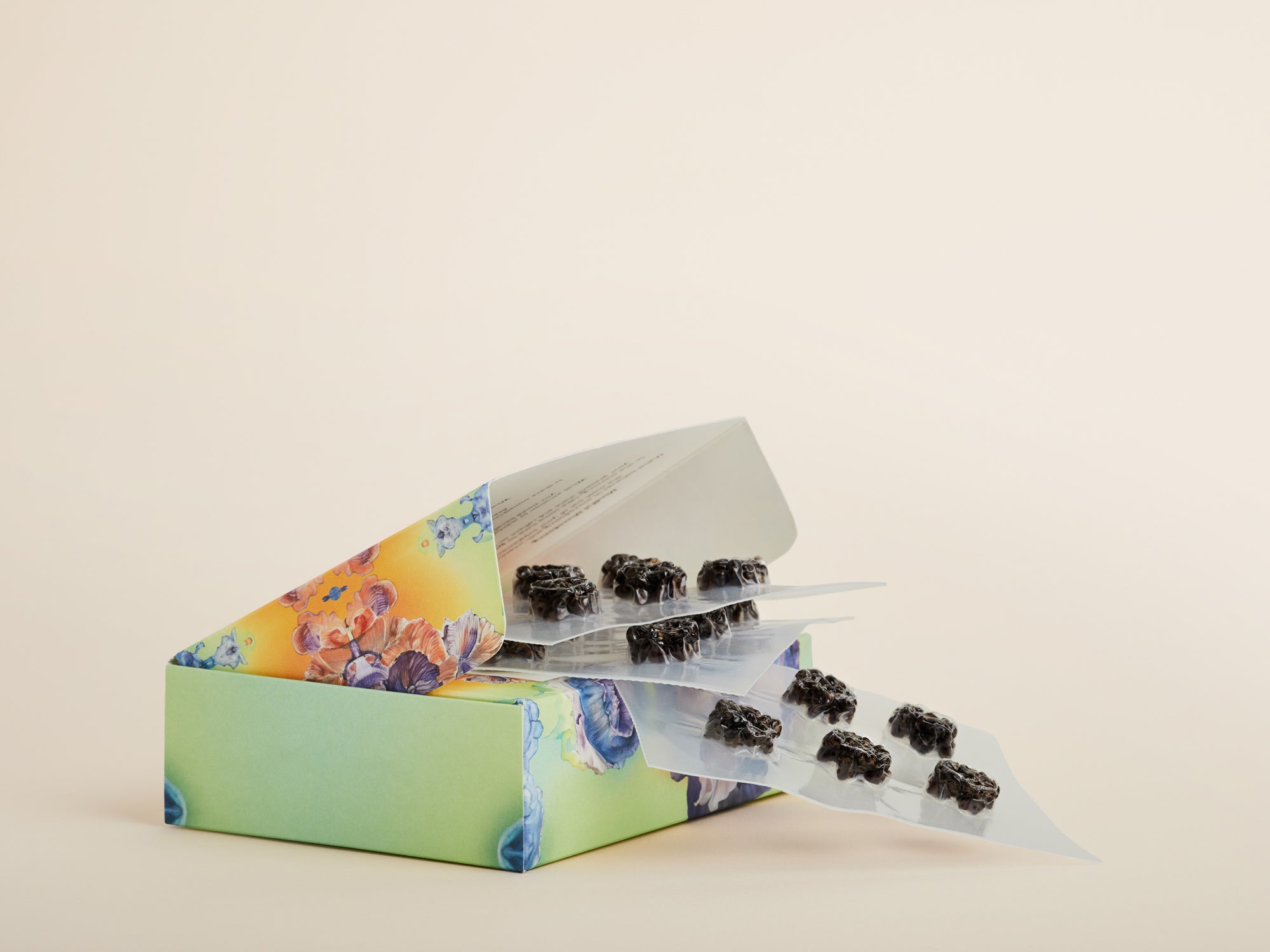

Mindful Microdosing isn't an escape; it's a tool to help you live the life you desire. Mindful Microdosing is ideal for those comfortable microdosing without a structured program and for those who have completed our Program and want to explore further.
If you're new to microdosing, we strongly recommend starting with our Mindful Microdosing Program (where you get your truffles with a dedicated App Program). While microdosing can be powerful, true transformation happens through the merging of science and mindfulness. Our program is developed by Mabel's neuroscientist, therapist, and coach. You can meet them here.
What changes in five weeks
Measured on a 15-question scale drawn from validated clinical assessments.
Self-reported by Mabel program participants before and after the program. Questions drawn from clinical scales such as WHO-5, PHQ-9, GAD-7, and PANAS, alongside Mabel's own measures.
The Guide
The neuroscience. The protocol. What the first five weeks actually feel like. Who shouldn't try this. How to know if it is right for you.
Free. In your inbox.
Thank you! The guide is on its way. If it doesn't show up, it might be hiding in your spam.

Sara, Lisbon
"I feel like myself again, and I can find joy in the little things."
Sol, France
"I feel less stuck with my thoughts."
Petra, Zurich
"All the ideas in my head finally find a way out and come to life."
Vivi, Switzerland
"My relationship with my mom has always been difficult, and I just spent a really lovely day with her."
Laura, Germany
"My energy is way higher, and my mind feels super switched on. I can easily work twelve hours and still feel sharp at eleven at night."
Nomerz, Belgium
"I'm more playfully happy, and I feel content and happy in my own skin."
Ready to start now?
New to microdosing? We strongly recommend starting with the Program. Structure is what makes the difference.
Built by people who actually know
Dr. Shauna Shapiro
Clinical psychologist and professor. Over 150 published papers. Three bestselling books. A TEDx talk with 3.5 million views. Has trained teams at Google, Stanford Medical School, and Harvard Law. Co-designed our program with us.
Dr. Amir Lotfi
Neuroscientist. Former Senior Director at Beckley Psytech in Oxford, one of the world's leading psychedelic biotech companies. Expert in psilocybin pharmacology and neuroplasticity. Designed our protocols and dosing.
The wellness space is full of people who shouldn't be anywhere near medicine this powerful. We chose to work with the ones who should.
The questions we get most
Everything you want to know before you start.
No. Microdoses are sub-perceptual by design. You take it in the morning and go about your day. If you're feeling "something," the dose is too high.
Yes, where we operate. Psilocybin truffles have been legal in the Netherlands since 2008 and are sold as a consumer product. We ship to most European countries from Amsterdam.
No. Psilocybin is non-addictive. It is currently being researched as a treatment for addiction, not a cause of it.
SSRIs and microdosing may be combined safely for many people, but every situation is different. We have a full article on this in our Magazine.
Some users feel a subtle shift within the first week. For most, the meaningful change shows up around weeks three to five. That is why the program is structured the way it is.
18 precisely measured doses of fresh psilocybin truffles, lab-tested, sealed. Plus full access to the program app: five classes, daily practices, guided meditations, journaling prompts, and a baseline assessment you take at the start and end.
The truffles open the door. This is your first step through.
Thank you! The guide is on its way. If it doesn't show up, it might be hiding in your spam.