
Do you feel a little lost?
If you've been feeling a little lost lately. Lonely, ungrounded, full of questions nobody around you seems to be asking. You're not imagining it.
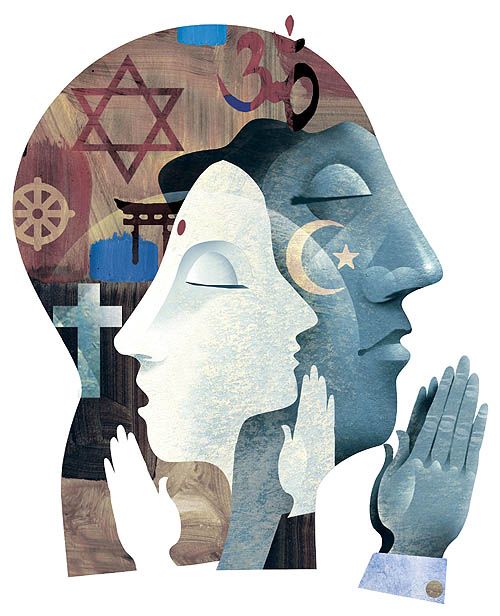
Something is unravelling in how we live. The structures that used to hold us (religion, community, tradition, a sense of belonging to something beyond ourselves) don't fit the way they used to. But the hunger for meaning hasn't disappeared. It's just looking for somewhere to land.
Maybe you've been doing the work. Meditating. Journaling. Therapy. Reading books that promise presence and peace. And it helps, sort of. But there's still something underneath that none of it quite reaches. A sense that you're close to something real but can't get through the last wall. That you belong to something larger but can't feel it fully. That there's a version of your life with more depth, more quiet, more meaning, and it's right there. Just out of reach.
You're not doing it wrong. You might just be missing the key.
Over 36 million people worldwide have used psilocybin at least once. Across Europe, psychedelic wellness ceremonies are now present in every EU member state, according to the European Union Drugs Agency's 2025 report. People aren't turning to psilocybin to check out. They're turning to it to come back. To themselves, to nature, to the feeling that they're part of something larger than their own life.
And the data is starting to explain why.
The Compound That Makes People Believe Again
Psilocybin acts on serotonin 2A receptors and quiets the Default Mode Network, the part of the brain responsible for your autopilot. Your habitual thought loops, your coping patterns, the story you've been telling yourself about how you're doing. When that quiets down, something else gets louder. Not noise. Presence.
Researchers at Johns Hopkins and Imperial College London have documented this consistently: psilocybin produces awe, a sense of connectedness, the dissolution of rigid ego boundaries, and a significantly increased belief that there is something larger than the self. These aren't occasional outliers. These are the primary reported effects.
In clinical language, they call it "mystical-type experience." In plain language, it's the feeling that you belong to something vast. That the wall between you and everything else is thinner than you thought.
At Mabel, we see this reflected in our own community. Before starting their microdosing protocol, only 23.4% of our clients reported feeling connected to something larger than themselves. After completing it, that number doubled to 46.7%. Those who never or rarely felt that connection dropped from 43.9% to 21.5%.
The Oldest Sacrament We Edited Out
None of this is actually new. We just forgot.
In The Immortality Key, researcher Brian Muraresku spent twelve years investigating the role of psychoactive compounds in early Western religion. His argument: the mystical experiences at the heart of ancient Greek and early Christian ritual weren't symbolic. They were pharmacological. The sacraments involved real psychoactive substances that induced genuine altered states. At some point in history, that ingredient was quietly removed from the story.
You can debate the specifics. But the broader point is hard to dismiss: humans have used plant medicine to access the transcendent for thousands of years. This isn't counterculture. It's the original culture. Psilocybin didn't arrive as an alternative to spirituality. It may have been the doorway all along.
When the Church Comes Knocking on the Mushroom's Door
Here's a plot twist.
The Republican party, the same political force that placed psilocybin on the Schedule 1 Drug list and shut down fifty years of research, is now actively supporting its rescheduling. Conservative religious organisations are publicly backing therapeutic use.
Why would established religion support a psychedelic?
Because churches are, among other things, institutions. And institutions need people. Pews across the Western world have been emptying for decades. Young people aren't coming back. The language of traditional religion feels, to many, like software that hasn't been updated.
Psilocybin produces exactly what decades of sermons have been trying to deliver: awe, humility, a genuine felt sense of the divine. For a church watching its congregation disappear, that's not competition. That's a powerful ally.
Psilocybin doesn't replace faith, but It might be the thing that brings people back to it.
A Society Looking for Something Solid
We are living through what some researchers call a "meaning crisis." Loneliness has been classified as a public health emergency. People feel fragmented, uprooted, disconnected from each other and from themselves. The containers that once held us (community, ritual, shared belief) have cracked.
But the need for those containers hasn't gone anywhere. We are wired for connection, for awe, for the feeling that we're part of something that extends beyond our own biography. When the traditional paths to that feeling close, people find new ones. Or very old ones.
Psilocybin doesn't tell you what to believe. It doesn't install a theology or hand you a worldview. What it does, gently and consistently, is narrowing the space between you and whatever you've been keeping at a distance. For some that's God. For others it's nature, presence, the sense that you are held by and part of something vast.
The word matters less than the feeling. And the feeling, according to both the clinical research and the lived experience of millions of people, is real.
The Bridge
If psychedelics can offer a gentle bridge between the mind and the mystical, between science and spirit... then that's a path worth exploring.
Not recklessly. Not without intention. But with the same seriousness and care that humans have brought to this relationship for thousands of years.
The question was never whether psilocybin belongs in the conversation about spirituality. The question is how long it will take us to remember it was always part of it.
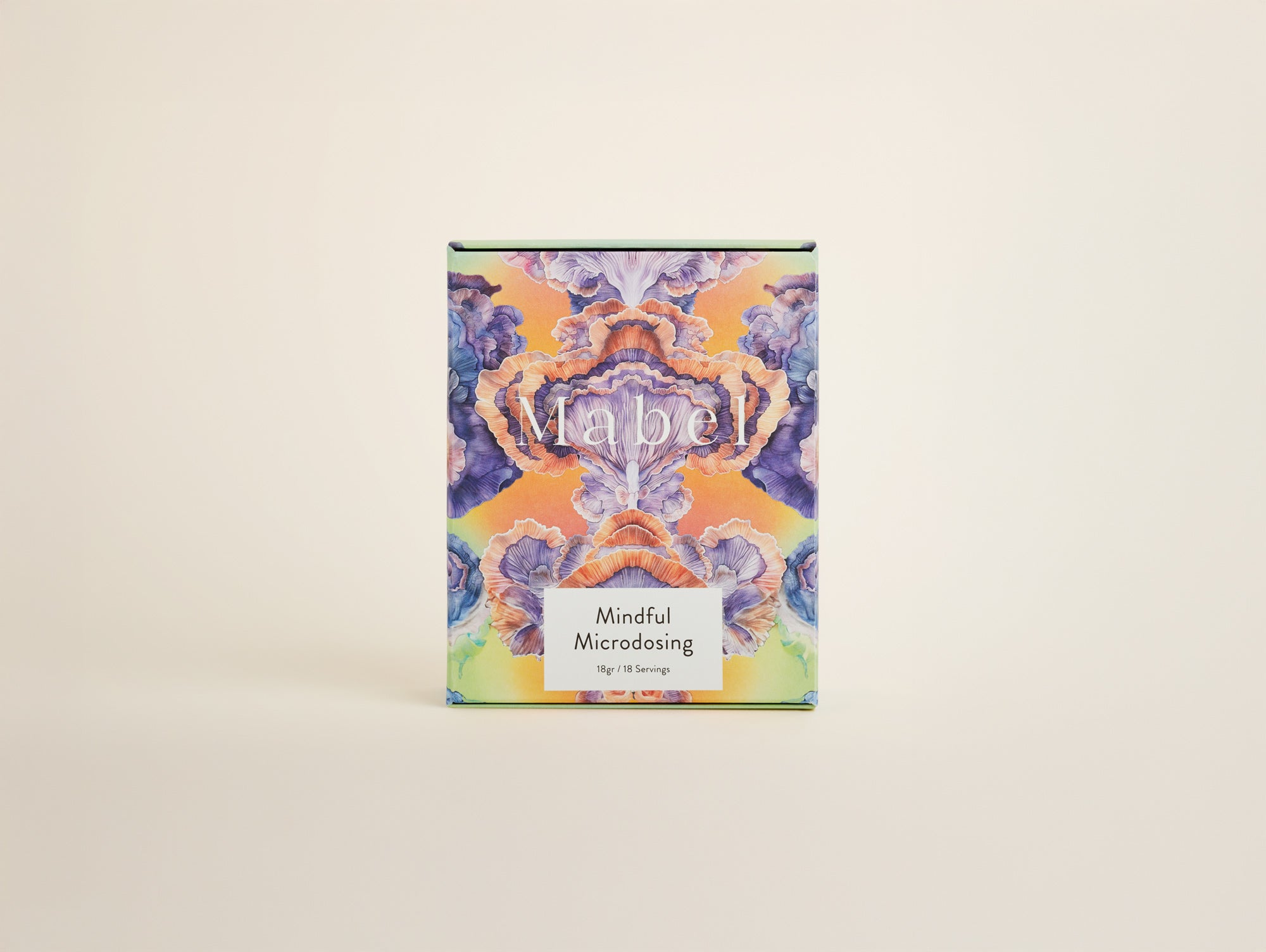
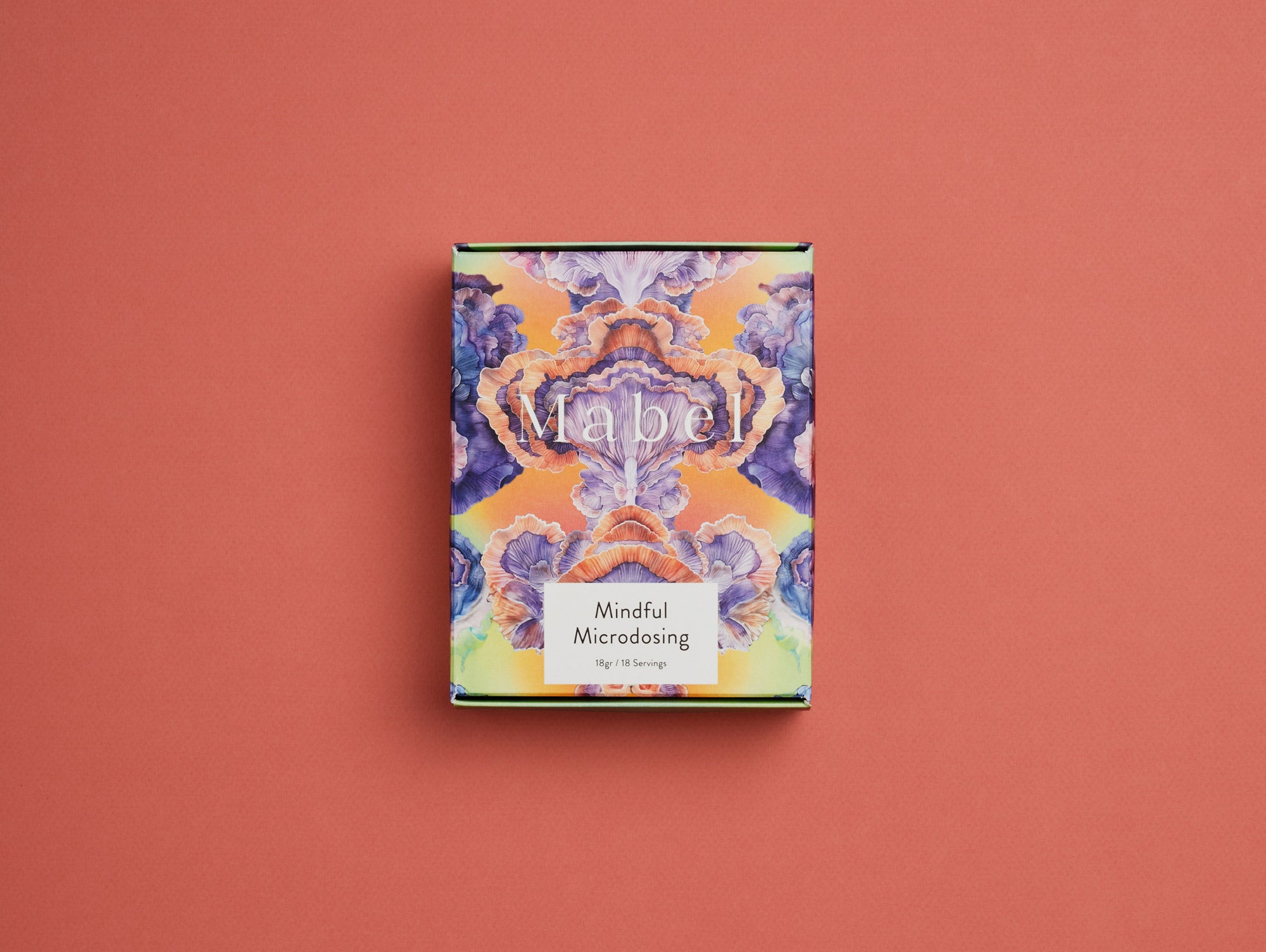
Mabel is a European psilocybin microdosing and functional wellness brand. Our Mindful Microdosing Program supports intentional, guided microdosing over a structured protocol.