


Regulate Yourself (And Other Terrible Advice)
Regulate Yourself (And Other Terrible Advice)
The wellness industry has a new fixation: nervous system regulation. It’s become the go-to explanation for everything from road rage to PMS to not liking your job. Breathwork studios sell it, coaches brand around it, and influencers whisper about it into their microphones: “How to regulate your nervous system.” It sounds reasonable. Who wouldn’t want a calmer, steadier self?
Except, have you ever looked up what regulate actually means? According to the Oxford English Dictionary, to regulate is “to control or maintain the rate or speed of a process.” Adjust, maintain, control. We’ve basically taken the body’s most ancient, instinctive system and turned it into a productivity metric.
What We Get Wrong
Your nervous system isn’t a trend. It’s a survival network. Roughly 500 million years old, it’s what allowed our species to spot danger, react fast, and live long enough to actually have opinions about nervous system regulation. It’s the reason you sense a car before you see it or catch your child before they fall. That surge of adrenaline? That’s not failure, it’s design. A well-functioning nervous system isn’t one that’s always calm. It’s one that knows when to rise and when to release.
The Problem Is the Missing Half
Modern life triggers activation — fight, flight, perform — hundreds of times a day, but rarely allows recovery. You get the cortisol spike, but not the drop. The stress, but not the relief.
- Heart rate slightly elevated
- Sleep shallow
- Digestion slow
- Focus scattered
- Mood tight
You feel like yourself, just with the volume turned up too high. That’s not weakness, that’s physiology.
When the HPA axis, the brain’s stress command center, keeps firing, cortisol lingers long after the moment has passed. The vagus nerve, which should signal safety, loses tone. Your body stops distinguishing between a real threat and a late work message.
Scientists call this allostatic load, the wear and tear that builds up when your system never fully resets. Dr. Bruce McEwen, the Harvard neuroendocrinologist who coined the term, described it as “the cost of chronic adaptation.”
It’s not just mental. Prolonged activation reshapes metabolism, immunity, and even the hippocampus, the part of the brain that regulates memory and mood. And it feels like that: functioning, but depleted. You answer emails, you smile, you cope, but there’s a low hum underneath it all, a body that never truly believes it’s safe. That’s not overreaction. That’s unfinished recovery, a stress cycle left mid-sentence.
The Other Kind of Damage
Then there’s the opposite mistake: the obsession with being calm. We breathe through anger we should feel. We meditate over grief that needs to move. We call it regulation, but it’s repression dressed in activewear.
When that becomes a pattern, the nervous system starts confusing control with safety — and they’re not the same. Repeated emotional suppression keeps the sympathetic system quietly activated, even when you appear relaxed. Cortisol and adrenaline keep circulating, subtly raising heart rate and blood pressure while blocking full parasympathetic recovery.
Over time, this quiet over-activation can reshape your body and brain chemistry. Research from Stanford shows chronic self-suppression heightens prefrontal activity, the brain’s control center, while muting the amygdala and insula, the regions that process emotion. Harvard studies echo this: long-term suppression keeps the HPA axis in a low-grade state of activation, impairing sleep, digestion, and immune resilience.
The result: you seem composed, but your system is still holding the charge. This can show up as muscle tension, migraines, gut issues, insomnia — all the body’s ways of finishing what the mind refused to. In short, your body pays for the calm your face performs.
“Over time, the nervous system becomes less flexible. When people live in a chronic state of managed calm, their range of emotional expression shrinks. They lose the physiological capacity for both full activation and full rest, the true definition of dysregulation.”
— Dr. Aimie Apigian, physician and trauma-biology expert
Psychologically, it narrows what’s called the window of tolerance, the zone where you can feel emotion without being hijacked by it. Real regulation isn’t about silencing emotions; it’s about letting the body complete its own “conversation”. Sometimes that means control. Sometimes it means letting go. The wisdom lies in knowing which is which.
So What Should We Call It Instead?
Perhaps regulation was never the right word. It implies control, as if the goal were to flatten every spike, polish every reaction and eliminate chaos. But we know that’s neither achievable nor realistic.
What we actually need is restoration. A nervous system that can rise, respond, and then return. One that isn’t overruled or overmanaged, just supported. So let’s stop trying to “regulate” our nervous system. Let’s instead start learning how to restore it.
A Natural Ally: Reishi for Restoration
There are tools — ancient, subtle, and natural — that help the body remember what safety feels like. Reishi (Ganoderma lucidum), often called the Queen of Mushrooms, is one of them. For centuries, she’s been used to calm the spirit and steady the heart.

How Reishi Supports Restoration
Today we know more about why she works: her compounds, triterpenes and beta-glucans, interact with the HPA axis, the body’s command center for stress. They help lower cortisol, ease inflammation, and strengthen the parasympathetic network, the system that restores balance after activation.
Reishi doesn’t sedate you; she restores capacity. You think more clearly. You sleep more deeply. You recover faster.
Dosage and What to Expect
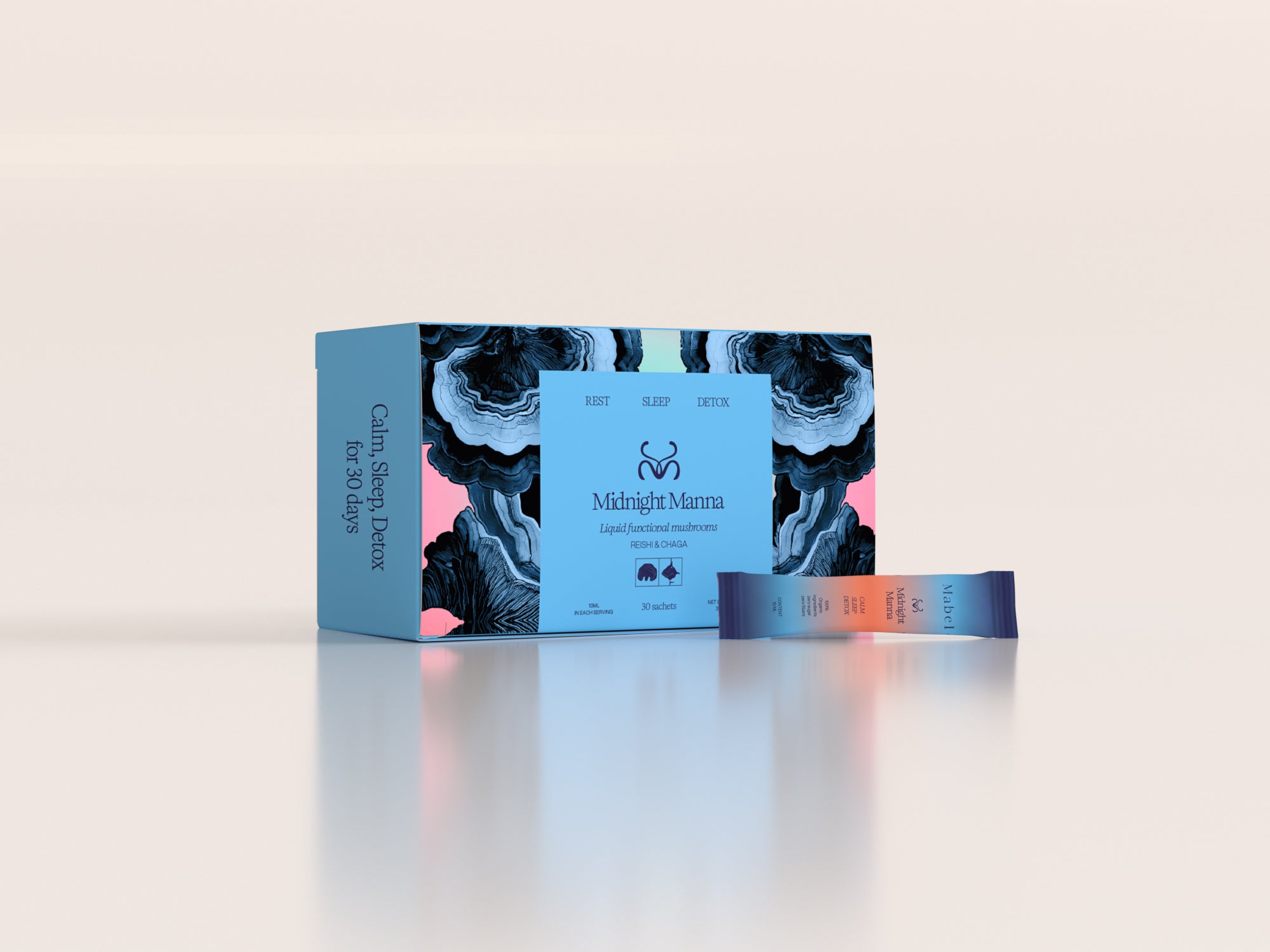
At an optimal nightly dose of 250 mg dual-extracted Reishi, as found in Midnight Manna, the effects are gentle and cumulative. Many people notice a calmer transition into rest within days; over a few weeks, the body begins to remember how to downshift on its own.
This isn’t about building strength or control — it’s about softening back into balance. A body that no longer braces for life, but lives it.
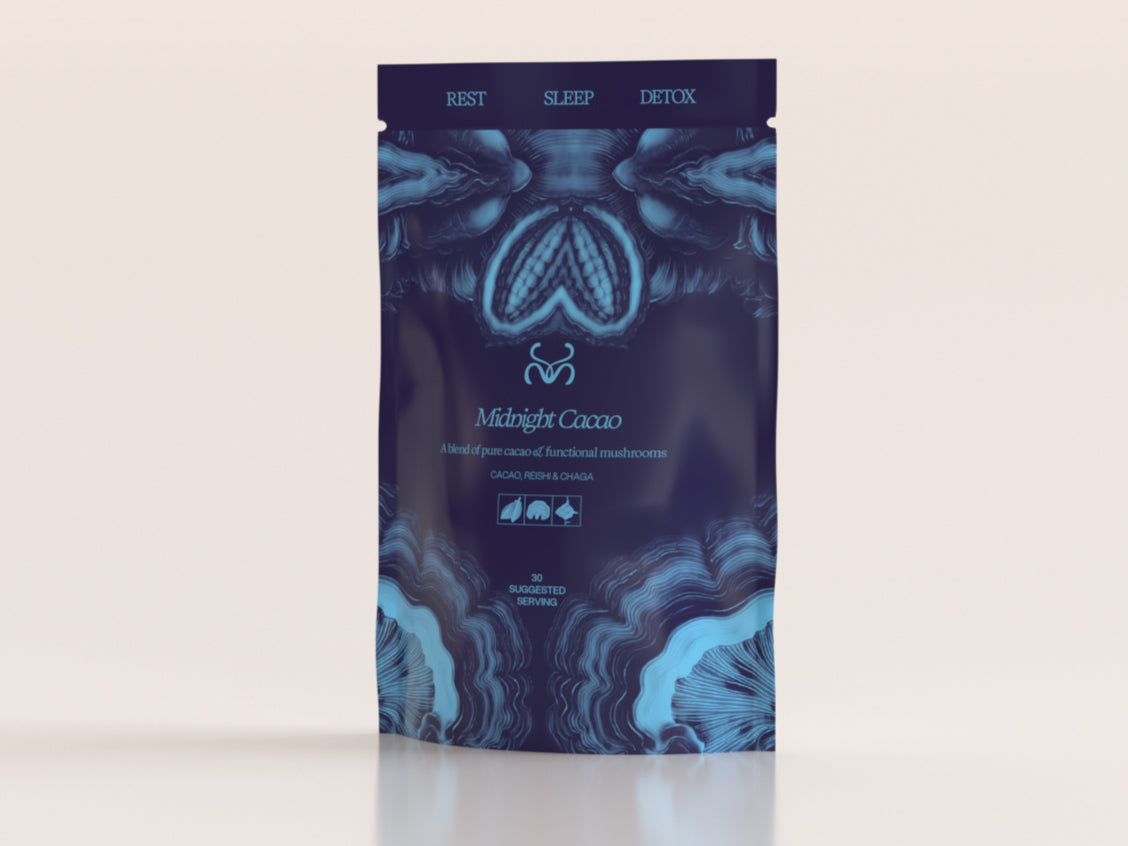
Midnight Manna & Cacao
Read more

Lion’s Mane: A Psychosomatic Psychobiotic for Gut–Brain Balance Brain fog. Low mood. Restless sleep. Digestive tension that never fully clears. For many, these symptoms seem unrelated — one mental,...

Do you feel a little lost? If you've been feeling a little lost lately. Lonely, ungrounded, full of questions nobody around you seems to be asking. You're not imagining it. Something is unrave...