

Functional mushrooms for endometriosis: Natural pain relief through fungi
You’ve probably been told it’s just bad periods. That you have a low pain threshold. That stress is making it worse. That this is what being a woman is.
If you have endometriosis, the average wait for a diagnosis is eight years. Eight years of being dismissed. Eight years of pain that doctors didn’t believe. Eight years before someone finally puts a name to what your body has been screaming about since you were a teenager.
This is not normal. It has been treated as normal for so long that we have forgotten how absurd it is.
The standard treatment, when you finally get diagnosed, is over-the-counter painkillers and hormone therapy. The painkillers cover the symptoms without touching the cause. The hormone therapy comes with side effects severe enough that many women stop taking it: weight gain, mood changes, irregular bleeding, bone loss. There is no cure. Surgery helps some women, but the tissue often grows back.
This is the standard of care for one in ten women. It hasn’t been good enough for a long time.
The research is starting to catch up, and one strand of it is pointing somewhere unexpected. Functional mushrooms — Lion’s Mane, Cordyceps, Reishi, and Chaga — are showing up in peer-reviewed work on endometriosis, chronic inflammation, and reproductive health. The mechanisms are real. The evidence is early but coherent. And the women who have tried them are describing exactly the kind of relief the science predicts.
This is not a cure. It is a tool. But for a condition where the standard treatments often fail, that tool deserves your attention.
Why endometriosis has been so badly treated
Endometriosis is now understood as a chronic inflammatory and hormonal disease, not just a gynaecological one. Tissue similar to the uterine lining grows outside the uterus. It bleeds, scars, and triggers systemic inflammation that affects the whole body. The pain, fatigue, brain fog, and digestive symptoms are all downstream of that inflammation.
That reframing matters. Because if endometriosis is an inflammatory disease, then anti-inflammatory interventions become part of the treatment conversation. And that opens up tools the conventional model has overlooked.
The reason the model overlooked them is not science. It is funding. The gender health gap, the structural underfunding of conditions that affect women, has left endometriosis under-researched relative to its prevalence. Women’s pain has not been taken seriously in research, in medicine, or in policy. You have been carrying the cost of that gap personally, in your body, your work, your relationships, your years.
That is the context for what comes next.
The research
The 2025 textbook Bioactive Compounds in Edible Mushrooms presents functional mushrooms as candidates for managing reproductive disease, citing their antioxidant, anti-inflammatory, hormonal regulatory, and immune-enhancing properties.
A 2024 review in the Journal of Gynecological Research and Obstetrics concludes that endometriosis is a chronic inflammatory disease that responds to long-term anti-inflammatory dietary intervention.
A 2025 review in the European Journal of Clinical Nutrition found that beta-glucans, the active compounds in functional mushrooms, significantly reduce fatigue. Fatigue is one of the most disabling symptoms of endometriosis and one of the least targeted by conventional treatment.
This is not fringe research. Functional medicine physicians, including Cindy Geyer, are now recommending mushrooms as part of the protocol for chronic inflammatory conditions, including endometriosis.
The case for mushrooms comes down to four mechanisms: anti-inflammatory action, hormonal modulation, antioxidant activity, and immune regulation. All four are central to how endometriosis progresses and how its symptoms manifest in your body.
The four mushrooms that matter
Lion’s Mane is best known for the brain. For endometriosis specifically, it earns its place for two reasons. It is anti-inflammatory in the central nervous system, which is where the brain fog comes from. And it stimulates nerve growth factor and supports myelin sheath production, which is the biology of focus and cognitive resilience. If pain and fatigue have eroded your ability to think clearly, this is the mushroom that holds it.
Jessica Duffin, founder of The Endo Belly Coach, has documented her own use of Lion’s Mane:
“I’ve been experimenting with medicinal mushrooms to help with my endometriosis symptoms. Mainly, my fatigue and brain fog, which as many of you know, is an ongoing battle with me. I feel clearer headed, my cognitive function has improved and my memory is sharper. Working has become so much less of a struggle.”
Duffin reports noticeable results from a daily teaspoon of Lion’s Mane.
Cordyceps addresses the fatigue. It enhances ATP production at the cellular level and improves oxygen utilisation, which translates to sustained energy without the caffeine crash. It also supports adrenal function, which gets depleted when the body has been running on stress and inflammation for years. If your fatigue is the symptom that costs you the most — your work, your social life, your capacity to show up for the people you love — Cordyceps is the most directly targeted of the four mushrooms.
Reishi is the regulator. It modulates hormone levels, lowers cortisol, and works on the GABA system to support the nervous system reset that chronic pain prevents. The hormonal modulation is particularly relevant because hormonal imbalance is one of the drivers of endometriosis tissue growth. Reishi’s effect on the hypothalamic-pituitary axis has been documented across multiple studies. It is also a profound sleep mushroom, which matters because deep sleep is when the body produces the inflammatory regulators it needs.
Chaga is the antioxidant powerhouse. One of the richest natural sources of antioxidants, it neutralises the oxidative stress that chronic inflammation generates. Oxidative stress is now understood to play a direct role in endometriosis progression. Reducing it is one of the most actionable targets in the disease.
The protocol
Functional mushrooms work over time, not on demand. The compounding effect builds across weeks, not hours. For endometriosis, the approach that makes most sense is to take Lion’s Mane and Cordyceps in the morning for clarity and energy, and Reishi and Chaga in the evening for nervous system reset, hormonal regulation, and overnight repair.
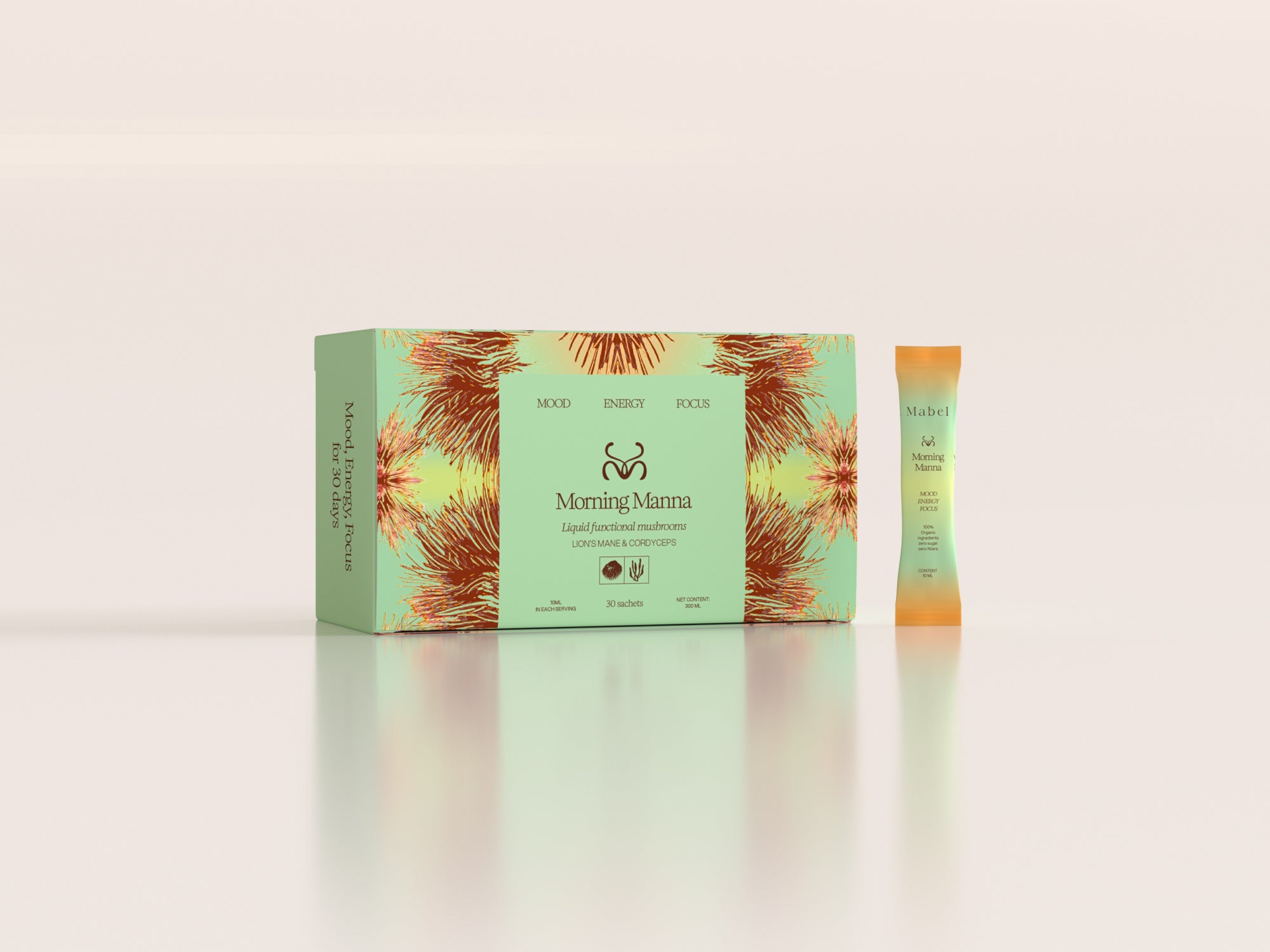
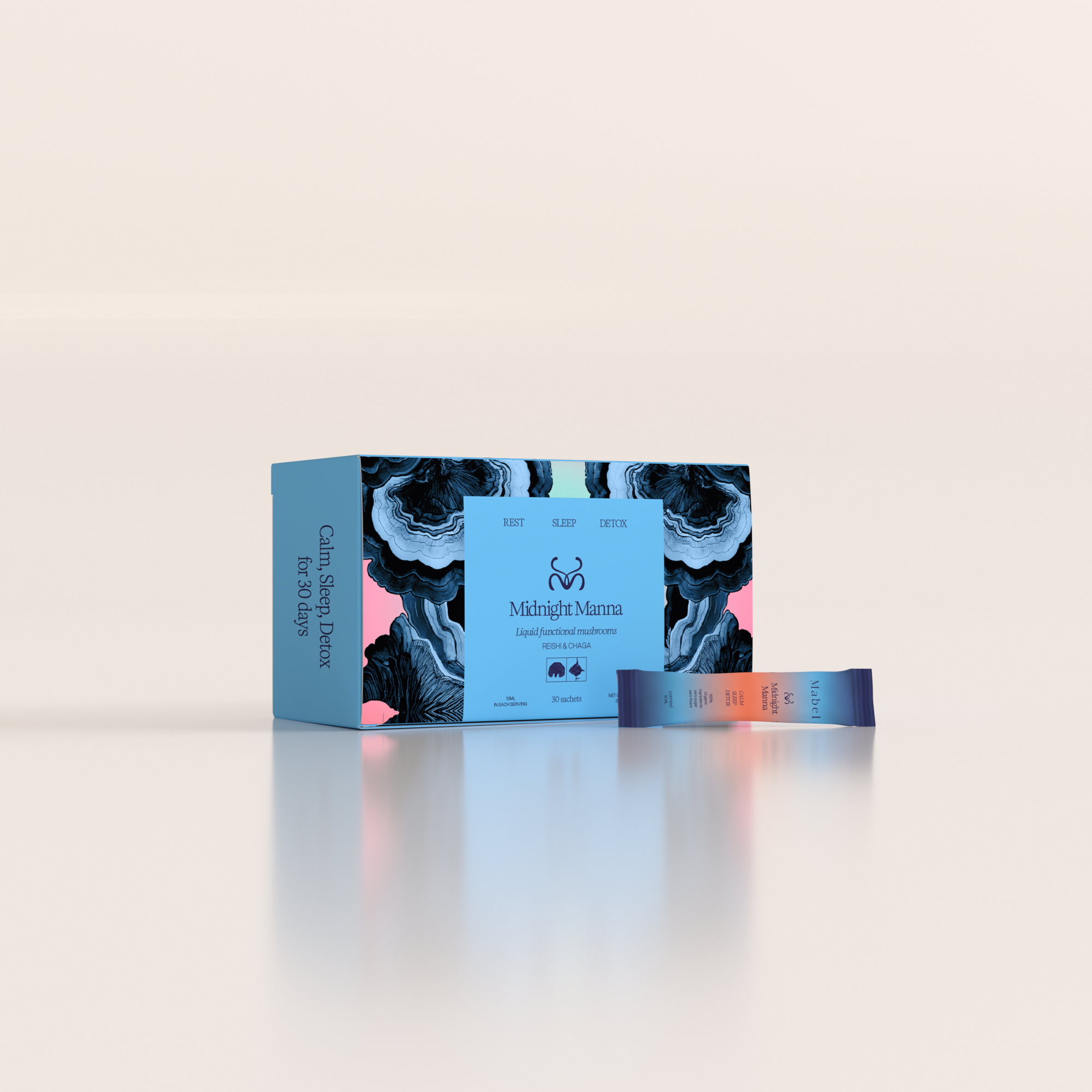
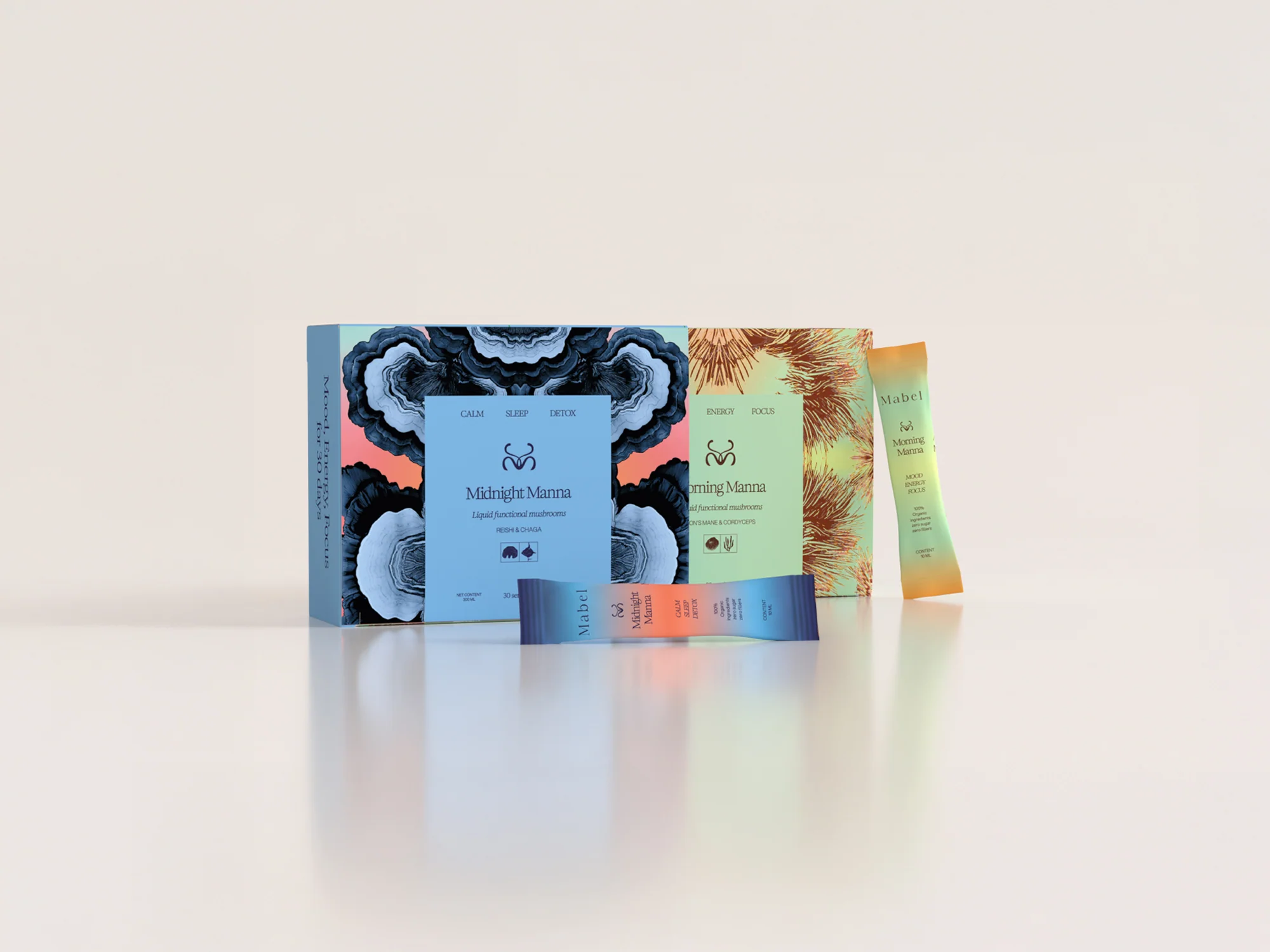
This is what Mabel built. Morning Manna delivers 500mg of dual-extracted Lion’s Mane and Cordyceps in a fast-absorbing liquid base. Midnight Manna delivers 500mg of dual-extracted Reishi and Chaga in the same format. Together they cover the full circadian rhythm of inflammation, energy, and repair.
For endometriosis, take both, daily. The morning formula holds focus and energy through the day. The evening formula resets the nervous system and supports the overnight cellular repair that disrupted sleep prevents. Used together, they build the anti-inflammatory and hormone-supportive foundation this disease demands.
The bigger picture
Endometriosis has been treated for decades as a problem of the uterus. The science is now clear that it is a problem of inflammation, hormone regulation, oxidative stress, and immune dysfunction. Each of those is something functional mushrooms address.
This is not a replacement for medical care. It is an adjunct that targets the systemic drivers of the disease, alongside whatever treatment you are already on. The women reporting the most relief are the ones using mushrooms as part of an integrated approach: medical treatment, anti-inflammatory diet, sleep, movement, supplementation.
The standard of care for endometriosis has not been good enough for a long time. Functional mushrooms are not the answer. But they are part of one.
Mush love,
Pernille
Frequently asked questions
Can functional mushrooms relieve endometriosis pain?
Mushrooms don’t work as immediate painkillers, the way ibuprofen does. They work on the underlying inflammation that drives the pain. Over weeks of consistent use, women typically report reduced cramping, less pelvic discomfort, and longer stretches between flare-ups. The effect is structural, not symptomatic.
How long until I feel a difference?
Functional mushrooms compound over time. Most women notice changes in energy and brain fog within 2-3 weeks of daily use. Effects on inflammation and hormonal balance build over 6-8 weeks. This is a long-term protocol, not a fix.
Can I take mushrooms alongside hormone therapy or other medications?
Yes, in most cases. Functional mushrooms work alongside hormonal contraceptives, hormone therapy, and most medications without interaction. If you are on immunosuppressants or have an autoimmune condition, introduce them slowly and check with your doctor. Beta-glucans modulate the immune system, and in rare cases this matters.
Should I follow a specific diet alongside mushrooms?
Endometriosis responds to long-term anti-inflammatory dietary intervention. Mushrooms work hardest when paired with a diet rich in vegetables, omega-3s, and whole foods, and lower in processed foods, refined sugar, and inflammatory oils. They are part of the protocol, not a replacement for it.
How do I take Morning Manna and Midnight Manna?
One stick of each, daily. Morning Manna in the morning, ideally with breakfast or coffee. Midnight Manna in the evening, around 30-60 minutes before bed. Sublingual absorption means you can take it directly under the tongue, or mix it into water, tea, or a drink. Consistency matters more than timing precision.
Disclaimer: This content is for informational purposes only and not medical advice.
Read more

Lion’s Mane: A Psychosomatic Psychobiotic for Gut–Brain Balance Brain fog. Low mood. Restless sleep. Digestive tension that never fully clears. For many, these symptoms seem unrelated — one…
Why our mushrooms speak your body’s language Ever feel like products for women are kind of missing the mark? Like somehow they were designed by someone who’s never…
recently viewed products