
Microdosing for Chronic Pain: A Natural Alternative.
If you live with chronic pain, you already know. It doesn't stay in your body. It crawls into your mood, your sleep, and the very sense of who you are.
Pain and depression run on the same neural circuitry, (the anterior cingulate cortex, or ACC.) meaning they activate each other. That's why more than 50% of people with chronic pain also experience depression.
This explains why painkillers often come up short. They target the body, yes. But the suffering has moved into the brain.
Psilocybin is the active compound in certain species of mushrooms and truffles. Microdosing means taking a small, sub-perceptual amount every other day. No trip, no altered state. Just a gentle shift in how the brain processes information. It works on your serotonin system, and emerging research suggests it may be uniquely suited for conditions where pain and mood are tangled together.
Same circuit, two problems
Think of chronic pain like a feedback loop that's lost its off switch.
Your body sends a pain signal. The ACC receives it and adds emotional context: fear, dread, helplessness. That emotional layer travels back down and sensitizes the pain response. The next signal is louder. The emotional reaction is stronger. And the cycle continues.
Opioids mute the pain signal itself. They don't touch the depression, the sleep disruption, or the catastrophizing. They address one half of a two-sided circuit. And they come with dependency risk that often creates a new problem entirely.
Antidepressants approach from the other side, broadly adjusting serotonin. But they don't target the pain-mood overlap. They help some people. For many, especially those with fibromyalgia, autoimmune conditions, or nerve pain, the relief is partial at best.
What would it look like to address both sides at once?
What a single dose of psilocybin did
New research published in Nature Neuroscience (Penn Medicine, 2025) found that a single dose of psilocybin reversed chronic pain and the anxiety, low mood, and emotional heaviness that come with it. In mice with nerve and inflammatory pain, the relief lasted nearly two weeks. From one dose.
Psilocybin didn't work where the pain was. It worked in the brain, in the ACC itself, calming the overactive neurons that fuse pain with despair. It hit the same serotonin receptors (5-HT2A and 5-HT1A) that microdosing engages. And unlike opioids, no signs of addiction potential.
That was mice. What about people?
What happened when people tried it
In 2023, three people with chronic nerve pain who had tried everything else started microdosing psilocybin on their own. Their stories ended up in PAIN, one of the world's leading pain research journals.
One man with nerve damage in his legs reported 90-95% pain relief per dose. He stopped taking tramadol, valium, and cannabis entirely.
A woman with complex regional pain syndrome, one of the most treatment-resistant conditions that exists, went from an 8 to a 0. The relief lasted 2 to 4 weeks per dose.
A 2024 paper in the British Journal of Pharmacology found the same pattern: psilocybin microdosing over 7-10 days, near-total pain relief, reduced opioid use.
Suppressed pain vs. processed pain: how microdosing works differently
Most pain medication does one of two things: suppress the pain signal (opioids, NSAIDs) or broadly adjust brain chemistry (antidepressants, gabapentin). Both can help. Neither addresses the specific circuit where pain and mood amplify each other.
Psilocybin does something else. It works in the ACC, restoring the brain's ability to regulate its own response. The overactive neurons that turn a pain signal into an emotional spiral begin to quiet. The catastrophizing softens. The signal is still there, but the volume drops.
Chronic pain also disrupts the balance between GABA (your brain's natural brake system) and glutamate (the accelerator), leaving the nervous system stuck in overdrive. Psilocybin helps restore that balance, so the brain rebuilds its own calm rather than borrowing it from a pill. This is likely why the effects compound over time, and why they outlast the dose itself.
One suppresses the signal. The other teaches the brain to process it differently.
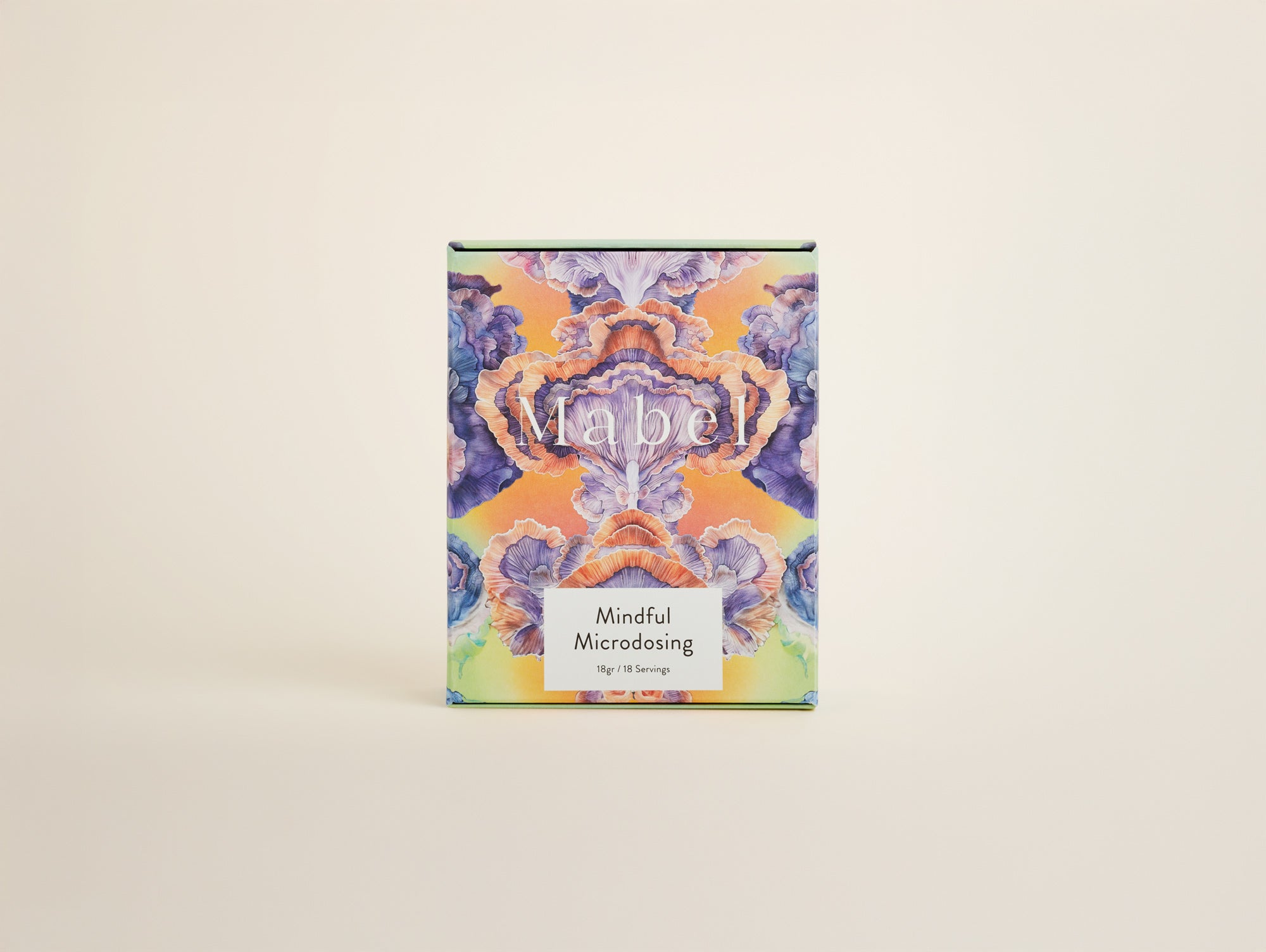
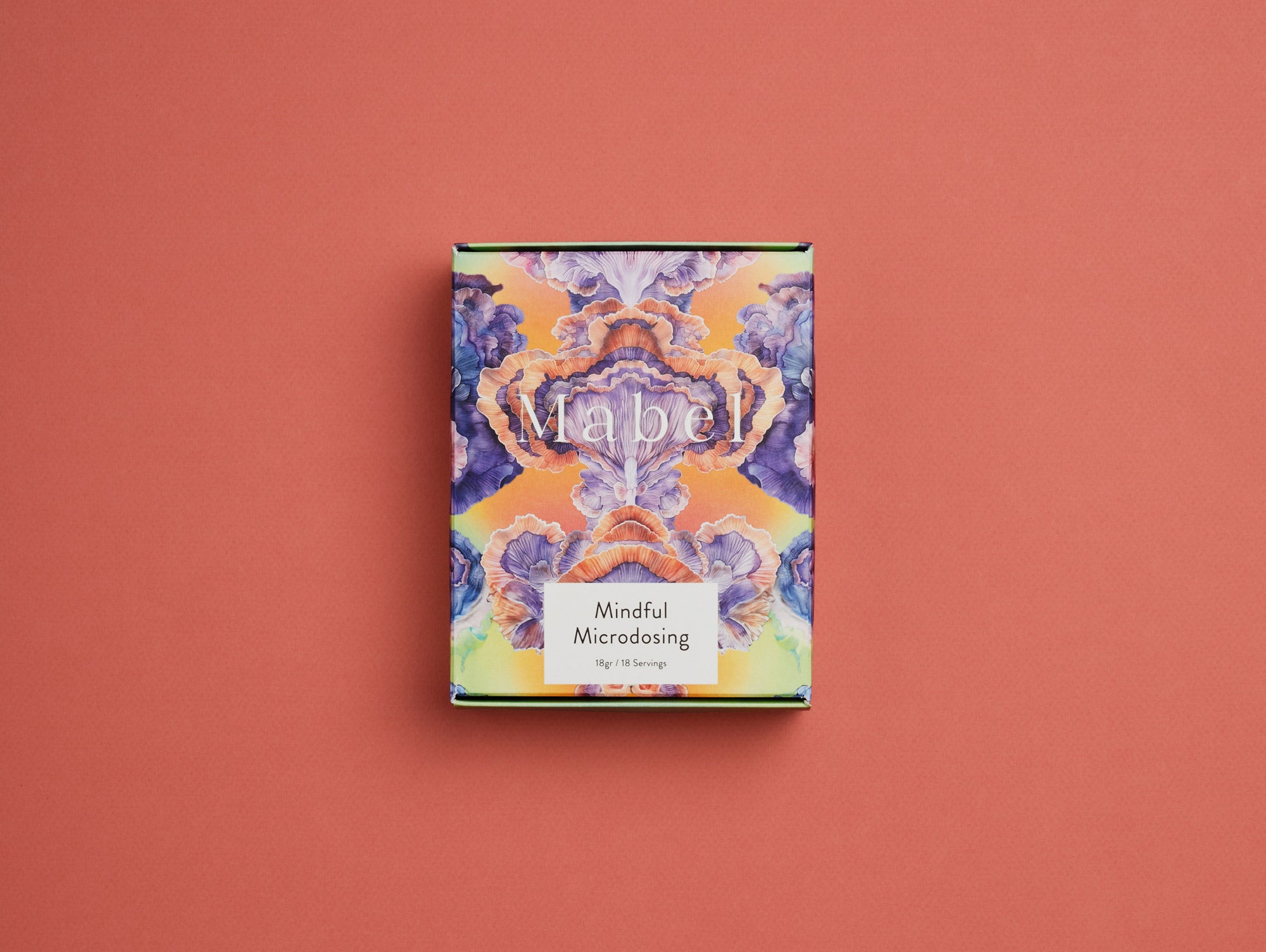
This is how our Mindful Microdosing Program works. Five weeks of psilocybin truffles paired with guided classes, journaling, and meditation through the Mabel app. If you've already done the program and want to continue, Mindful Microdosing is the standalone option.
What our clients report: microdosing for fibromyalgia, autoimmune pain, and chronic conditions
The pattern is remarkably consistent:
The pain doesn't disappear, but the grip loosens. The sharpness is still there on some days, but the constant background hum, the way it colors everything, starts to fade.
Less catastrophizing. That mental spiral where a flare-up becomes "this will never end" becomes "I can't work" becomes "what's the point." The spiral shortens. Sometimes it doesn't start at all.
Sleep comes back. Often the first thing chronic pain disrupts and the first thing microdosing restores. Not sedation. Actual rest.
The relationship with the body shifts. From war to something softer. From betrayal to communication. This is the one that surprises people most.
In their words
Rebecca, Tuscany (fibromyalgia, autoimmune conditions):
"I have many debilitating autoimmune issues including fibromyalgia. I was offered opioids by my rheumatic specialist but knowing the risk, I decided to try a different path. Mabel, both the truffles and the app, have really helped me push forward. I'm halfway through and feeling real hope and moments of happiness I haven't felt for at least a decade. It's helped me see my life through a different and better lens."
Marsella, Madeira (lifelong physical pain):
"The results have been outstanding: I've successfully cleared lifelong physical pain and, more importantly, I have been able to recalibrate my mental framework. A refined mental outlook directly creates a healthier physical state, and this product is the ultimate tool for that evolution."
Veronique, France (joint pain, menopause):
"After trying several highly-rated menopause supplements, these were the only ones that actually improved my mood swings and my joint pain. The improvement in my depression-like state was immense. I noticed my joint pain returned within just two weeks of stopping. Now I know exactly when to renew. It isn't cheap, but my well-being is priceless."
Mélie, Nantes (chronic daily migraines, burnout, PTSD):
"I'm a chronic migraine sufferer, one to two attacks daily, day and night. On 36 nights of microdosing, I had zero nighttime episodes. My daytime migraines have spaced out and become far less intense. My brain fog started clearing within the first week. And my anxiety dropped so significantly that I've halved my medication."
Esther Stella, Germany (ME/CFS, former cancer patient):
"I was a cancer patient 10 years ago and I have ME/CFS for 13 years. Every alternative is welcome to get rid of pain and gain more energy. Having found my sweet spot, I'm fine with 1.5 truffles every second day. It keeps me going smooth and relaxed through the day. Less pain, more energy, more focus, more open-hearted."
The honest version
The research on microdosing psilocybin for chronic pain is still emerging. The Penn study was in mice. The human studies are small. We don't have large trials yet.
But what we have is hard to ignore.
A growing body of neuroscience showing psilocybin works exactly where pain and mood intersect. A mechanism that makes biological sense. Real people stopping opioids. And thousands more reporting the same pattern: the pain doesn't vanish, but the grip loosens, the catastrophizing quiets, sleep comes back, and the relationship with the body shifts from war to something softer.
This is not a replacement for your medical team. And if you're on immunosuppressants, opioids, or other medication, talk to your doctor first.
But for those carrying pain that medicine hasn't fully addressed. For those who have been told "we've tried everything." This is a natural alternative worth exploring.
If you're relying on cannabis to manage pain and you're curious about what microdosing could offer, either alongside it or eventually instead, we've written about cannabis and microdosing and about microdosing for autoimmune health in more detail.
Your call. Always.
Mush love,
Pernille
Frequently asked questions
Can microdosing psilocybin help with chronic pain?
Emerging research says yes. Psilocybin works in the anterior cingulate cortex, the brain region where pain and mood overlap. A 2023 study in PAIN journal found significant relief in people with chronic nerve pain, and a 2025 Nature Neuroscience study showed it reversed both pain and the depression that comes with it. Our clients with fibromyalgia, autoimmune conditions, migraines, and ME/CFS consistently report that while pain doesn't disappear entirely, its intensity and emotional weight decrease substantially.
Is microdosing a natural alternative to opioids for pain?
It works differently. Opioids suppress the pain signal at the source, which creates dependency risk. Psilocybin works in the brain's prefrontal cortex, restoring the ability to process pain without the emotional spiral that amplifies it. In the published studies, people have reduced or stopped taking opioids after starting psilocybin microdosing. The effects tend to compound over time rather than requiring dose escalation.
Does microdosing work for fibromyalgia?
Fibromyalgia is a condition where the brain amplifies pain signals beyond what the body is actually experiencing. This makes it notoriously resistant to conventional painkillers. Because psilocybin works at the level of how the brain processes pain, not at the pain site itself, it may be particularly relevant. Our clients with fibromyalgia report improvements in pain perception, sleep, brain fog, and the low mood that often accompanies the condition.
Can I microdose while on pain medication?
If you're taking opioids, NSAIDs, or other pain medications, talk to your doctor before starting. Psilocybin interacts primarily with the serotonin system, so particular caution is needed if you're also taking SSRIs, SNRIs, or lithium. Many of our clients use microdosing alongside existing treatments and, over time, work with their doctors to adjust their medication. Never change your prescribed medication without medical guidance.
Why does chronic pain cause depression?
Pain and depression share the same neural circuitry in the anterior cingulate cortex. Chronic pain overactivates this region, which processes both physical sensation and emotional response. Over time, the feedback loop becomes self-reinforcing: pain triggers low mood, low mood sensitizes pain, and the cycle deepens. More than 50% of people with chronic pain develop depression as a result.
Disclaimer: This content is for informational purposes only and not medical advice.
Microdosing