


Microdosing for ADHD in women: a natural alternative
Article written by Amir Lotfi, PhD. Chief Scientific Officer at Mabel and Senior Director at Beckley Psytech.
If you have ADHD, you already know it isn’t just about focus. It’s the racing thoughts at 2am. The harsh inner monologue when you forget the thing… again. The hyper-fixation on the wrong project for six hours and nothing for the project that was actually due. The time blindness. The rejection sensitivity. The feeling that everyone else got a manual on life you never received.
For a long time, the conversation about ADHD in women barely existed. We were the girls who daydreamed instead of disrupted in schools so we got missed. By the time we got diagnosed in our 30s or 40s, we’d already built a life around compensating for a brain we couldn’t fully manage. Stimulants help. Therapy helps. Strategies help. But for a lot of us, even with all of that, something is still missing.
Dr. Shauna Shapiro, Stanford-trained clinical psychologist, has spent her career studying how the brain rewires itself through attention. When she designed Mabel’s Mindful Microdosing Program, it was with one specific brain in mind: the kind that can’t stop running. The kind that lies awake. The kind that won’t quiet down even when you tell it to. The ADHD brain.
This is a piece about microdosing psilocybin as a natural alternative worth considering. Something that reaches the parts of ADHD that conventional treatment isn’t really designed for: the rumination loop, the harsh self-talk, the emotional regulation, the way your brain refuses to let you rest.
What microdosing actually is
Psilocybin is the naturally occurring compound found in certain mushrooms and truffles. At microdose levels, we’re talking about a small fraction of what would create a psychedelic experience. There is no “trip” here. Just a very low, sub-perceptual dose taken on a structured schedule over weeks, where the effects compound quietly in the background of your life.
Unlike stimulants, which work by flooding the brain with dopamine for a few hours and then wearing off, microdosing works through the serotonin system. The shifts tend to be slower, gentler, and more cumulative. Less on/off, more recalibration.
“During very long work days I can focus for a longer time as well as add creative input to collaborative work, when without microdosing my focus and creativity in the work setting stopped after maybe 3 hours. I’m really happy I tried this.”
— Andrea H., Mindful Microdosing Programme
The ADHD brain and the default mode network
Here’s something conventional ADHD treatment doesn’t address: the default mode network.
The DMN is the brain network that lights up when you’re not focused on a task. It’s the place of mind-wandering, self-referential thinking, rumination, and that voice in your head that won’t shut up. In ADHD, the DMN tends to be overactive and poorly regulated, which is why “just focus” never works. Your brain isn’t choosing to wander. The wandering network is running the show.
Psilocybin has been shown to decrease activity in the DMN. Less rumination. Less mental noise. More room for the prefrontal cortex (the brain’s executive function centre) to actually do its job.
For a woman with ADHD, that translates to fewer late-night thought spirals, less harsh self-criticism, and a clearer line between thinking about doing the thing and doing the thing.
“Mindful Microdosing is a true game changer. As a woman with ADHD and in the midst of her perimenopausal adventure, I’ve experienced a huge change in every aspect of my life. Uplevelled self-esteem, higher energy levels, calmness and focus. I’m just so grateful.”
— Karolina, Mindful Microdosing
A note on women, ADHD, and the moment we’re in
Women with ADHD are diagnosed later, medicated less, and often dismissed when we describe what’s actually going on. Stimulants work for some of us, but many women report that they sharpen the focus while doing nothing for the emotional dysregulation, the rejection sensitivity, the rumination, or the burnout that comes from holding it all together for decades.
Microdosing fits into a different conversation. Not stimulant versus no stimulant. Not medication versus no medication. A complementary practice that addresses the parts of ADHD that pills don’t reach.
“Since I use this, I’ve noticed a heightened sense of focus during work and a remarkable reduction in the mental fog that often clouded my thinking. It’s not about feeling ‘high’ in any sense; it’s about experiencing a clearer, more engaged, and effortlessly productive version of myself.”
— Chiara, Mindful Microdosing Programme
The Mindful Microdosing Program
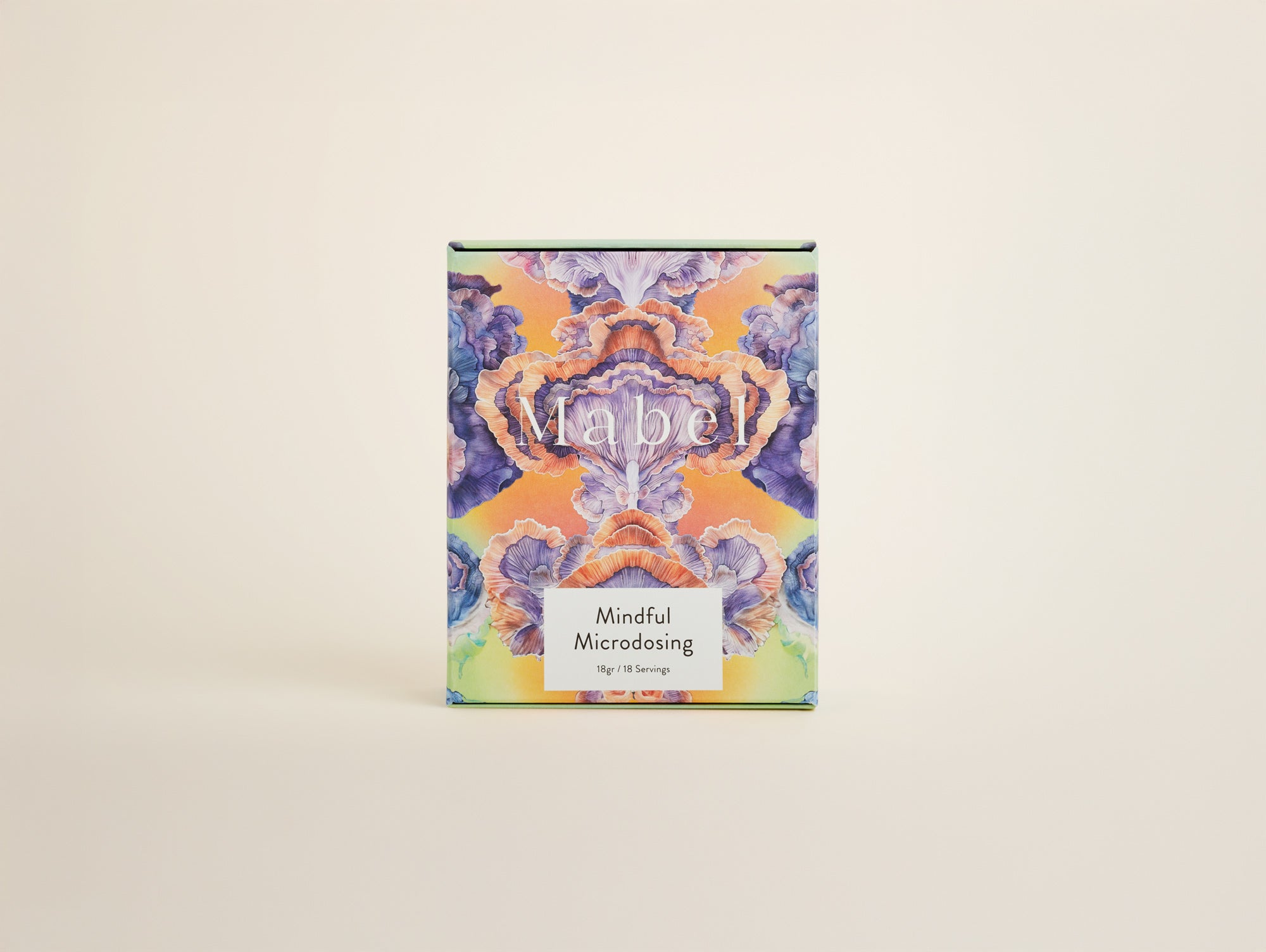
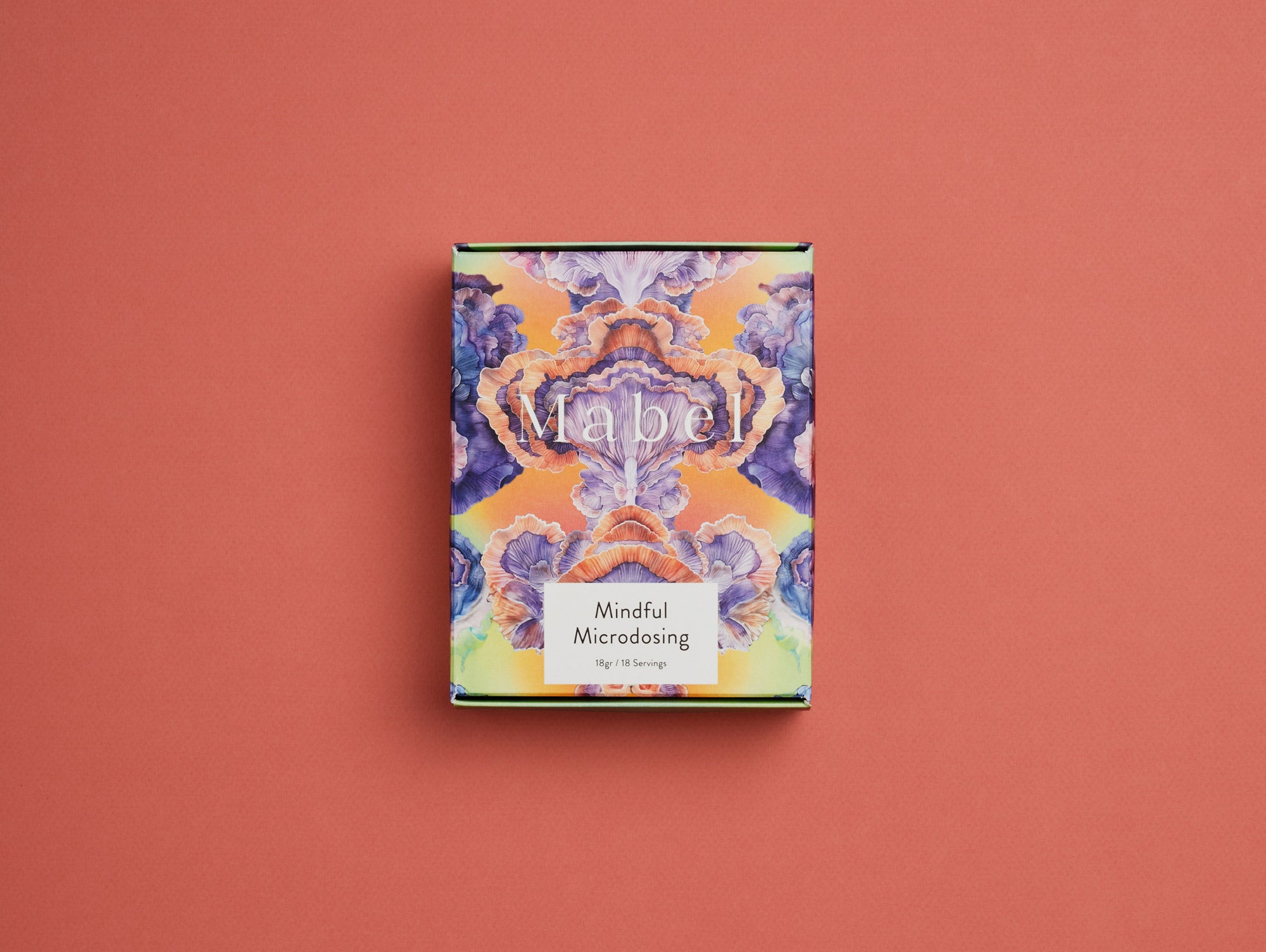
The Mindful Microdosing Program is built for exactly this. Five weeks of structured psilocybin truffle dosing, paired with guided classes, journaling prompts, and meditation practices through the Mabel app. Designed by Dr. Shauna Shapiro, Stanford-trained clinical psychologist and one of the leading voices in mindfulness and self-compassion research. Her work on mindfulness as a tool for quieting the inner critic is the foundation of the program’s structure, and exactly what the ADHD brain, with its overactive default mode network, tends to need most.
The program isn’t only the truffles. It’s the structure around them: the ritual, the intention, the integration. That structure is what turns a substance into a practice, and a practice into change that actually lasts.
“Both my husband and I have ADHD. Microdosing has completely changed how we handle stress. It makes a big difference on my productivity. I’m so grateful for Mabel for making such an amazing product.”
— Lindi, Mindful Microdosing Program
What women with ADHD tend to notice
Across our community, the patterns are consistent. The shifts are subtle in week one and accumulate. By week three or four, most women describe:
- Steadier focus, especially on tasks that used to slip away
- A quieter inner monologue
- Less rumination at night
- More emotional steadiness, especially around rejection
- A softer relationship with self-criticism
- Better follow-through, without the frantic energy of a stimulant
- More presence in conversations
- Sleep that actually feels like rest
It isn’t a cure for ADHD. ADHD is a neurotype, not a disease, and we’re not interested in pretending otherwise. What microdosing seems to do is take the edge off the parts of ADHD that hurt the most. The shame. The spiral. The feeling that you’re failing at being a person.
“I have perimenopause and ADHD. It has been a total game changer. I am aware, more playfully happy, and I can hold a conversation for longer. I feel content and happy in my own skin.”
— Nomerz, Mindful Microdosing Program
What’s missing?
ADHD in women is increasingly discussed because women have finally started talking about it out loud. The conversation was overdue, but what’s still missing from most of that conversation is what to actually do once you know.
Microdosing could be one answer. Not the only one, not the right one for everyone, but a real one that a growing number of women are building into their lives. Not to escape ADHD but to thrive with it.
Frequently asked questions
Can microdosing psilocybin help with ADHD?
The evidence is early but encouraging. Naturalistic studies show that adults with ADHD who microdose report improvements in inattention, hyperactivity, emotion regulation, and self-compassion. A 2024 Maastricht University study specifically found significant improvements in emotion regulation and self-compassion in adults with ADHD after microdosing psilocybin. Our clients with ADHD consistently report a quieter inner monologue, less rumination, and better follow-through.
How is microdosing different from stimulant medication?
Stimulants like Adderall and Ritalin work fast, last a few hours, and address focus by flooding the brain with dopamine. Microdosing works slowly, accumulates over weeks, and works through serotonin to recalibrate brain networks (especially the default mode network) that drive the rumination and emotional dysregulation side of ADHD. They’re not in competition. Many of our clients use both.
Can I microdose while taking ADHD medication?
Usually yes, but speak to your prescriber first. Psilocybin works on serotonin, while stimulants work on dopamine and norepinephrine, so they target different systems.
Why do so many women with ADHD report self-esteem improvements?
Because ADHD in women often comes with decades of internalised shame. The rumination, the rejection sensitivity, the comparison loops, all of these are downstream of an overactive default mode network. By quieting the DMN, microdosing tends to reduce the harsh self-talk and rumination that erode self-worth over time. The self-esteem shift isn’t separate from the ADHD shift. It’s the same shift, viewed from a different angle.
How long does it take to notice changes?
Most women in our community notice subtle shifts in week two and clearer changes by weeks three to four. The Mindful Microdosing Program is structured over five weeks for exactly this reason. The effects compound rather than peak.
A note on safety
Microdosing isn’t right for everyone. If you have a personal or family history of psychosis or bipolar disorder, or if you’re on lithium, MAOIs, or certain other medications, microdosing isn’t recommended. If you’re on stimulants for ADHD, microdosing can usually sit alongside them, but you should speak to a healthcare provider you trust before adding anything new.
Disclaimer: This content is for informational purposes only and not medical advice.
Microdosing
Read more

We sat down with our wonderful Shauna Shapiro, the teacher in your Mindful Microdosing Program for a chat about what Mindfulness really means and how we can use it in our daily lives. Shauna shap...

Lion’s Mane: A Psychosomatic Psychobiotic for Gut–Brain Balance Brain fog. Low mood. Restless sleep. Digestive tension that never fully clears. For many, these symptoms seem unrelated — one mental,...